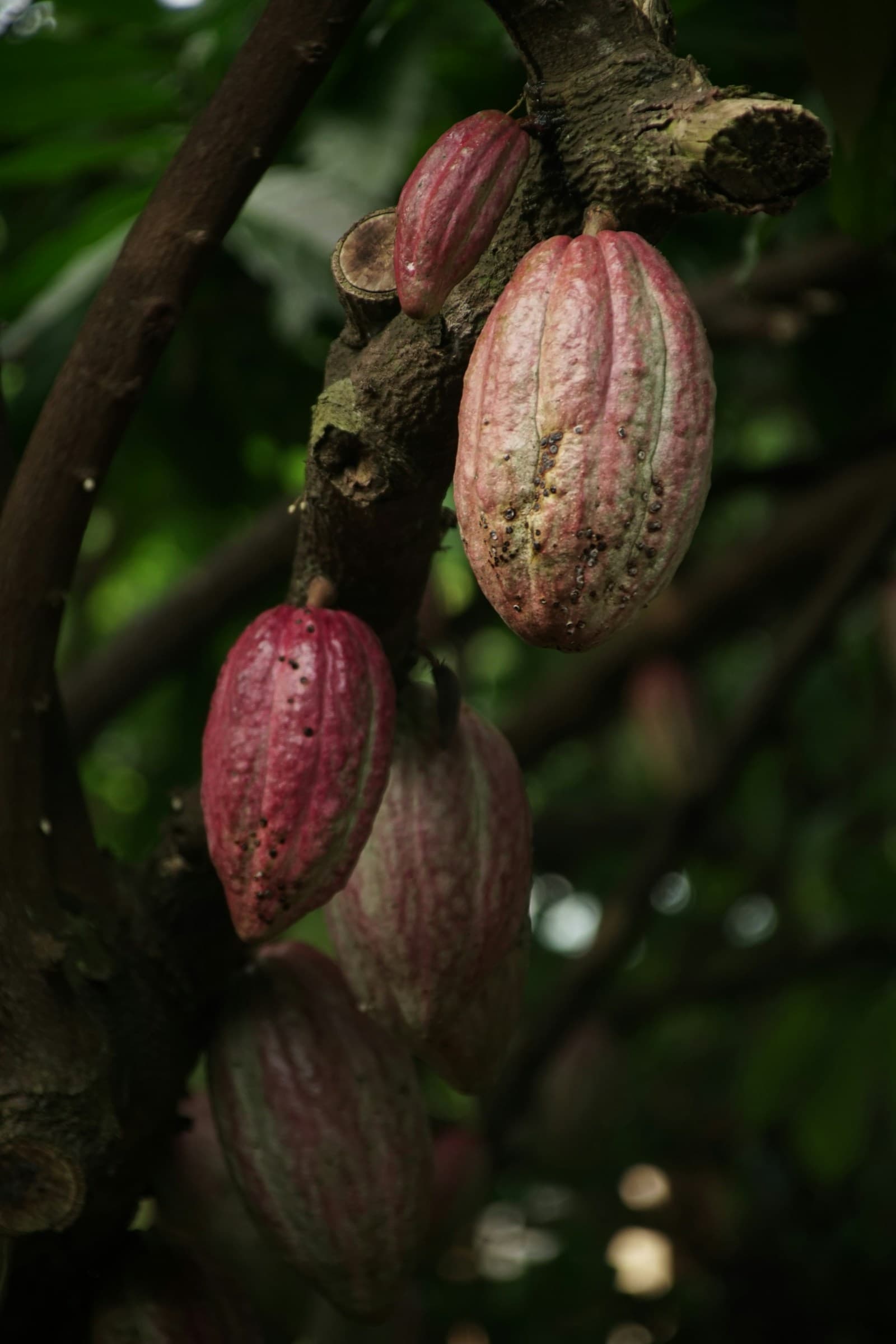
The roças (cocoa and coffee plantations) of São Tomé and Príncipe worth visiting: Agostinho Neto, Monte Café, Água Izé, São João dos Angolares, Sundy and Belo Monte, the cocoa story and where to stay at a roça.
Which roças in São Tomé and Príncipe are worth visiting? The most impressive are Roça Agostinho Neto, with its old hospital and long avenue of colonial buildings; Roça Monte Café, with its coffee museum; Roça Água Izé, the largest in the archipelago; Roça Sundy on Príncipe, where Einstein's theory was confirmed; and Roça São João dos Angolares, famous for chef João Carlos Silva's lunches. Visiting the roças — the old colonial plantations — is the best way to understand the history and present of São Tomé and Príncipe.
For an overview of the country, from things to do to weather, prices and safety, see our São Tomé and Príncipe travel guide.
In this guide we explain what a roça is, which ones to visit in each part of the two islands, which ones you can stay at and how to fit them into an itinerary, with recommendations from our local team.
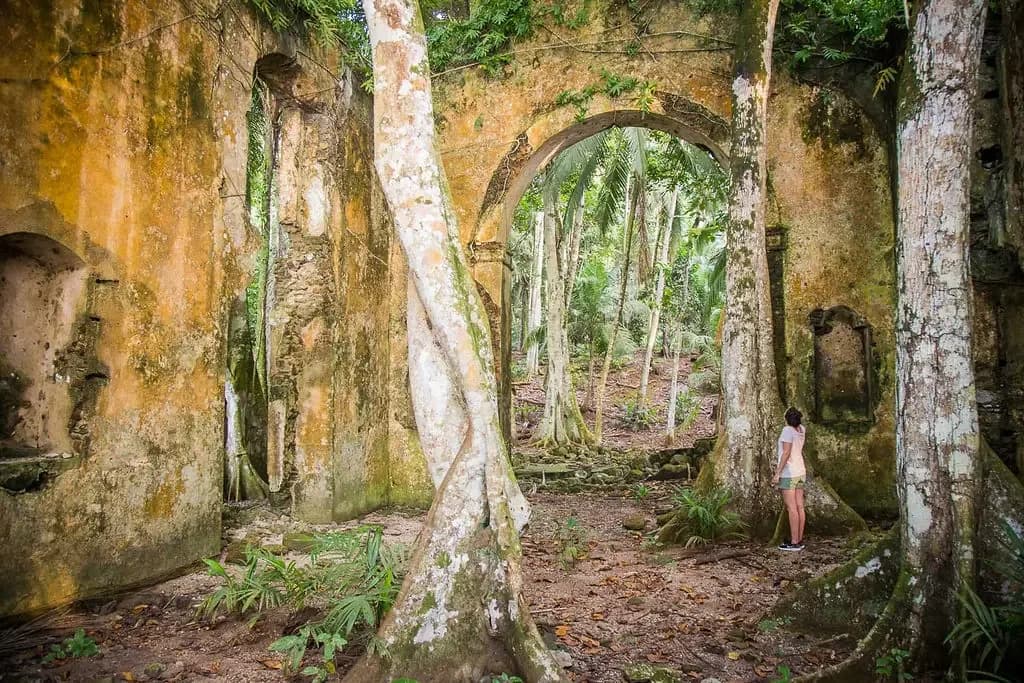
Ruins of an old roça swallowed by the tropical rainforest. Photo: Príncipe Collection
What is a roça in São Tomé and Príncipe
In São Tomé and Príncipe, roça is the name for the large agricultural plantations created in the colonial period, mainly for coffee and cocoa. Each roça was a small town: the manager's house, a hospital, warehouses, cocoa dryers, workshops, a chapel and the sanzalas, the workers' quarters. Some had their own railway and access to the sea.
After independence in 1975 the roças were nationalised and many fell into decline. Today you find everything: roças in ruins swallowed by the forest, roças where whole communities live in the old sanzalas, and roças restored as boutique hotels and restaurants.
A history of coffee, cocoa and forced labour
In the 19th century, coffee and then cocoa transformed the islands. In the early 20th century São Tomé and Príncipe was one of the largest cocoa producers in the world. That wealth was built on the labour of contract workers brought from Angola, Cape Verde and Mozambique, in very harsh conditions — a history that still weighs heavily and that local guides tell frankly.
Visiting a roça is therefore more than seeing beautiful buildings: it is understanding how the country was formed and meeting the communities who live in these places today. We tell the cocoa side of the story in our article on São Tomé cocoa.
Enjoying this article?
Get the day-by-day trip programme, with dates and prices
Sao Tome and Principe Holidays with Flights: 9 Days of Plantations, Beaches and Rolas Islet9 days / 7 nightsfrom 2,350 €
Roças to visit on São Tomé island
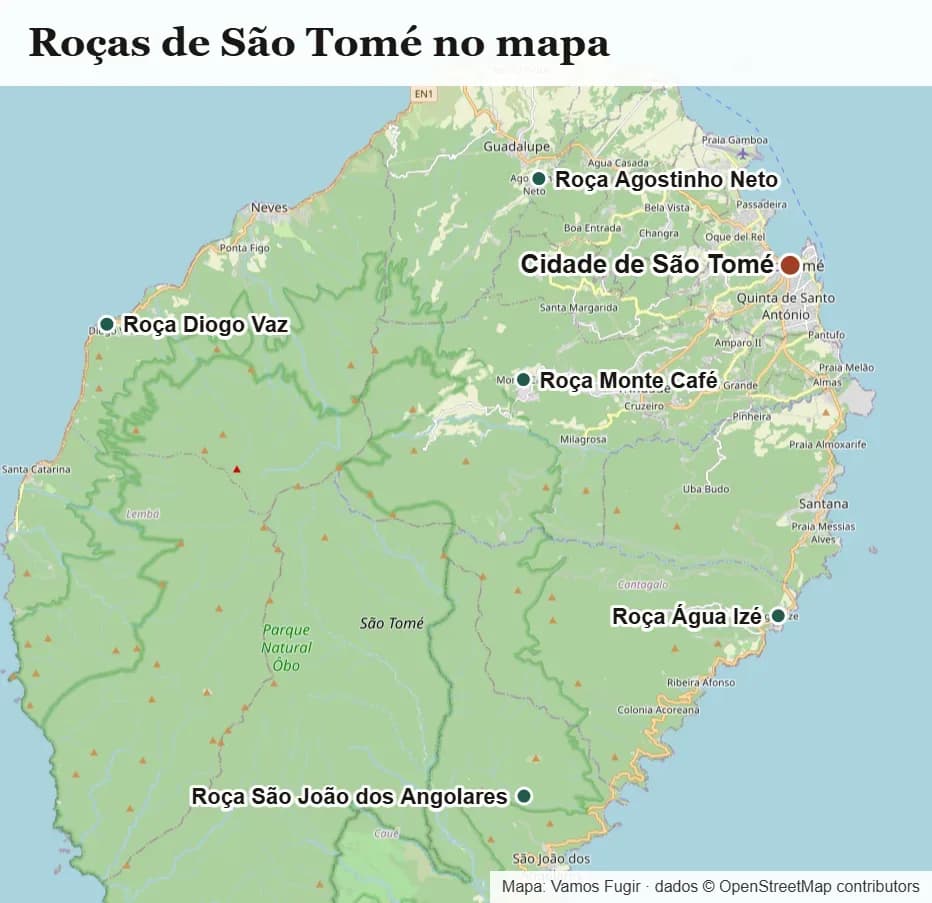
The main roças on São Tomé island. Map: Vamos Fugir, data © OpenStreetMap contributors.
| Roça | Area | Highlight |
|---|---|---|
| Roça Agostinho Neto | North, about half an hour from the capital | Avenue of colonial buildings and the old hospital |
| Roça Monte Café | Centre, highlands | Coffee museum and start of the Coffee Route |
| Roça Saudade | Centre, highlands | Birthplace of Almada Negreiros; restaurant with a view |
| Roça Água Izé | East coast | The largest in the archipelago, one of the first cocoa roças |
| Roça São João dos Angolares | South | Chef João Carlos Silva's lunches; has rooms |
| Roça Diogo Vaz | North-west, past Neves | Fine cocoa, near the Santa Catarina tunnel |
| Roça Bombaim | Interior | Remote, a base for hikes in Obô |
Roça Agostinho Neto (north)
Formerly Roça Rio do Ouro, renamed after independence after Angola's first president, Roça Agostinho Neto is one of the most impressive in the country. A long avenue climbs between colonial buildings to the old hospital, a monumental building now in ruins. It is about half an hour from the capital, on the way to Lagoa Azul, and is still home to hundreds of people.
Roça Monte Café (centre)
In the highlands above Trindade, Roça Monte Café was founded in the 19th century and has a small coffee museum showing the process from plant to cup. It is the starting point of the Coffee Route, with cool mountain air and views over the forest.
Roça Saudade (centre)
Also in the highlands, Roça Saudade is where the artist Almada Negreiros was born in 1893. It has a space dedicated to his memory and a restaurant overlooking the forest, a perfect lunch stop on the Coffee Route.
Roça Água Izé (east coast)
Roça Água Izé is the largest in the archipelago and one of the first to grow cocoa on São Tomé. The ruined seafront buildings, the old hospital and the warehouses tell the story of the cocoa that made the country one of the world's largest producers. It is on the way south.
Roça São João dos Angolares (south)
Restored and overlooking the bay, Roça São João dos Angolares is famous for the long lunches of creative São Tomé cuisine by chef João Carlos Silva, a succession of small dishes made with island produce. It also has rooms and an art gallery. Book ahead.
Roça Diogo Vaz (north-west)
Beyond Neves, on the north-west coast, Roça Diogo Vaz is linked to fine cocoa production and lies in one of the most beautiful and least visited parts of the island, near the Santa Catarina tunnel and the black sand beaches.
Featured trip
Sao Tome and Principe Holidays with Flights: 9 Days of Plantations, Beaches and Rolas Islet
9-day small-group trip around São Tomé with direct flights from Lisbon, half board, the boat crossing to Rolas Islet and lunch by chef João Carlos Silva.
Roça Bombaim and the inland roças
In the interior of the island, between forest and rivers, there are several more remote roças, some with simple accommodation. They are good bases for hikes in Obô Natural Park, but involve slow roads and sometimes a 4x4.
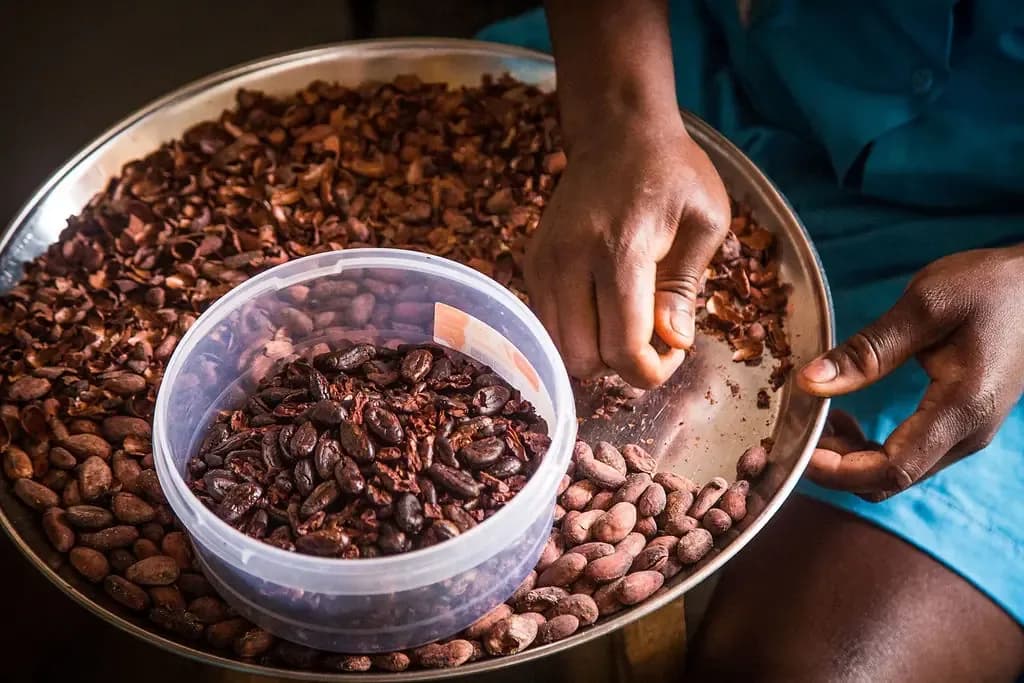
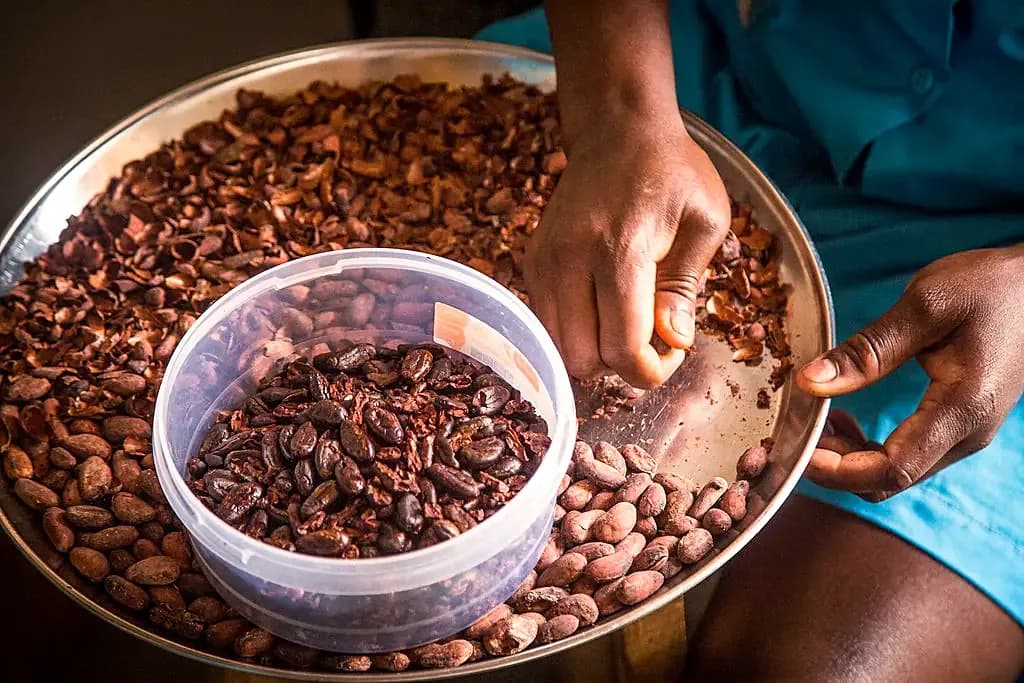
Dried cocoa beans from São Tomé and Príncipe, one of the finest cocoas in the world. Photo: Príncipe Collection
Roças to visit on Príncipe island
Roça Sundy
At Roça Sundy, on 29 May 1919, Arthur Eddington's expedition photographed the total solar eclipse that confirmed Einstein's General Theory of Relativity. The roça was turned into a boutique hotel, which as of November 2026 is closed for renovation and will reopen; the community still lives on the roça. Before you go, check whether visits to the manor house and the eclipse plaque are running during the works.
Roça Belo Monte
The restored manor house of Roça Belo Monte sits high up, with the most photographed view on Príncipe: the perfect curve of Praia Banana. It is a hotel, but you can also come for lunch.
Roça Terreiro Velho
A fine cocoa roça linked to chocolate maker Claudio Corallo, with a viewpoint over the forest and the bay. When visits are running, they explain the whole process from cocoa to chocolate.
Roça Porto Real and Roça Paciência
Two large historic roças on Príncipe, with ruined colonial buildings amid the vegetation. They show the wildest side of the island, where the forest has taken everything back. More in things to do on Príncipe island.
Staying at a roça
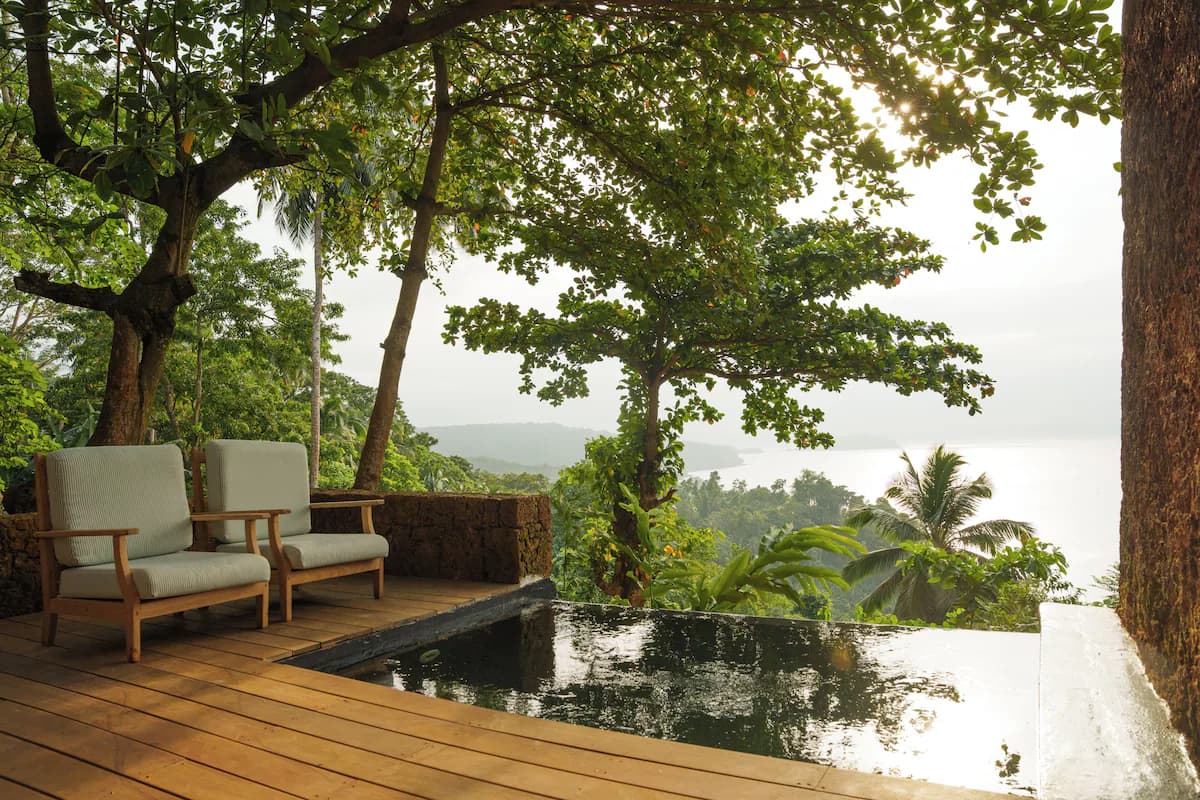
Staying at a roça is an experience you won't find anywhere else: waking up in a colonial house in the middle of the forest, with the community starting its day below. On São Tomé island there are roças with rooms at different levels of comfort, from the simplest to the most refined; on Príncipe, Roça Sundy and Roça Belo Monte are boutique hotels. We compare the options in where to stay in São Tomé and Príncipe and where to stay on Príncipe island.
How to plan your roça visits
| Route | Duration | Roças and stops |
|---|---|---|
| Coffee Route | 1 day | Trindade, Roça Monte Café, Roça Saudade and São Nicolau waterfall |
| Cocoa Route, in the north | 1 to 2 days | Roça Agostinho Neto, Lagoa Azul and, with more time, Roça Diogo Vaz |
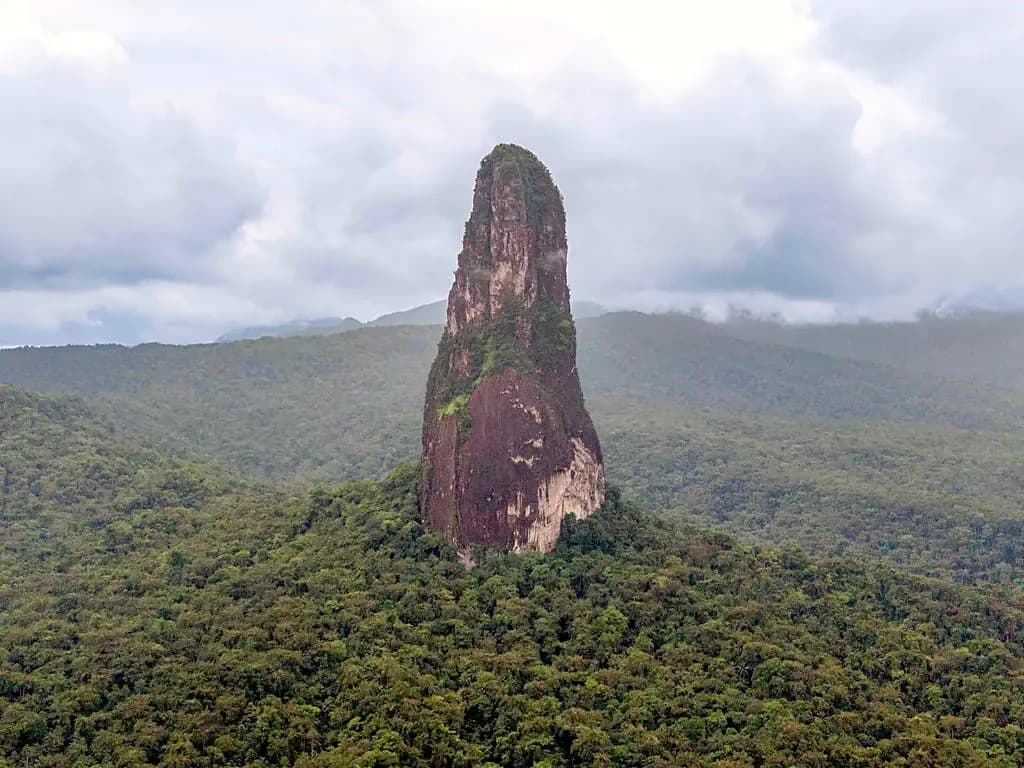
| East coast and south | 2 days | Roça Água Izé, Boca do Inferno, lunch at Roça São João dos Angolares and Pico Cão Grande |
| Príncipe island | 3 to 4 days | Roça Sundy, Roça Belo Monte, Roça Terreiro Velho and Roça Porto Real |
See how to plan the island by area in things to do in São Tomé and Príncipe and our São Tomé and Príncipe itinerary.
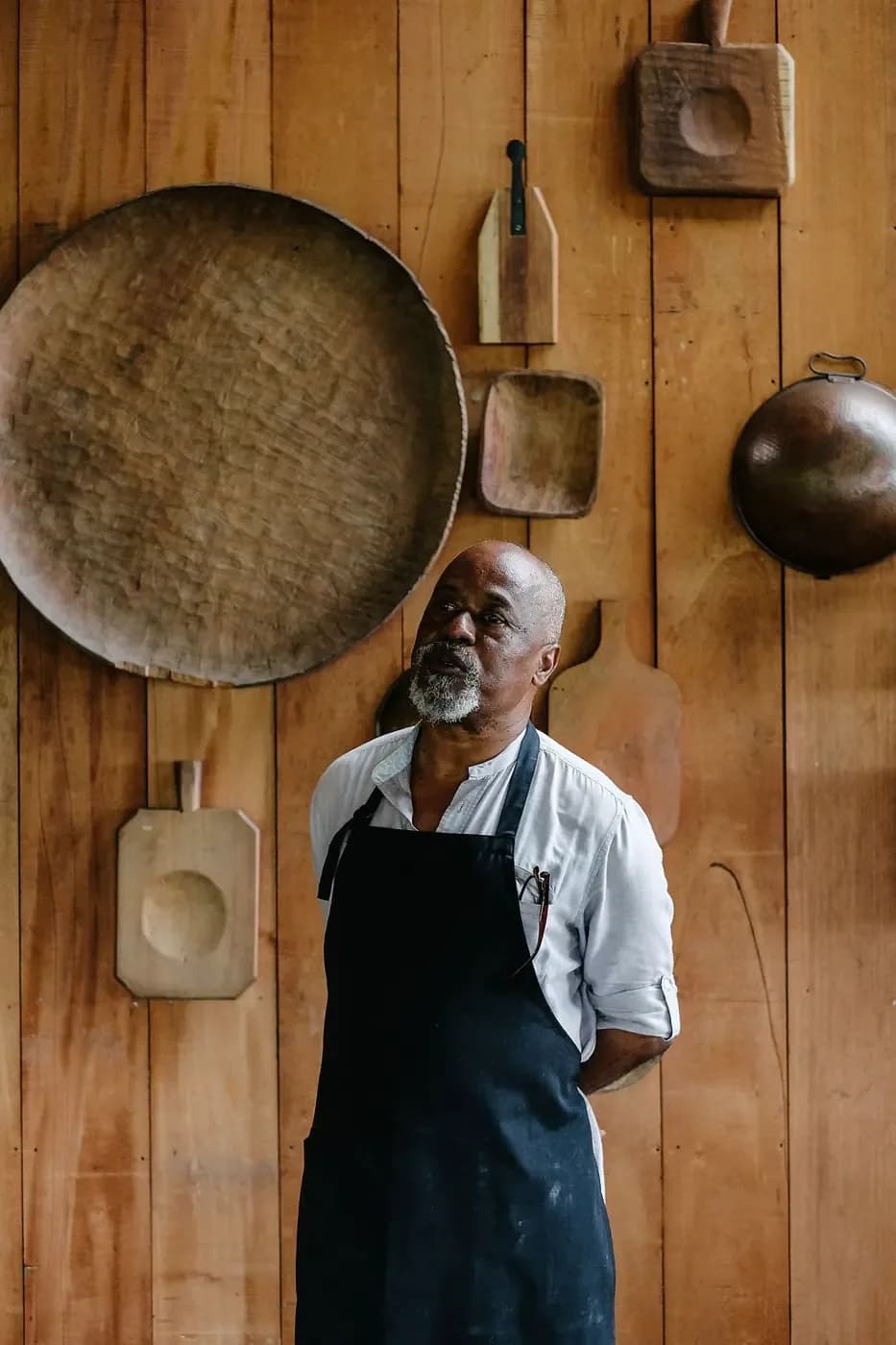
Traditional São Tomé kitchen with wooden utensils. Photo: Príncipe Collection
Visiting the roças respectfully
- Many roças are now inhabited villages: the houses are people's homes, not film sets.
- Always ask permission before photographing people, especially children.
- Go with a local guide who knows the communities and tells the history honestly.
- Buy directly from producers — chocolate, coffee, crafts. That is how tourism leaves value in the roças.
FAQ: roças of São Tomé
What is the most beautiful roça in São Tomé?
It depends on what you are after: Roça Agostinho Neto for the impact of its architecture, Monte Café for coffee and altitude, São João dos Angolares for the food and Sundy, on Príncipe, for its history.
What is the largest roça in São Tomé and Príncipe?
Roça Água Izé, on the east coast of São Tomé island.
Do you have to pay to visit the roças?
At some roças you pay a small entrance fee or a contribution to the community; at others the visit is free. Museums and guided tours have their own prices.
Can you stay overnight at a roça?
Yes. Several restored roças have rooms, on both São Tomé and Príncipe, from simple places to boutique hotels.
Why is Roça Agostinho Neto called that?
It was called Roça Rio do Ouro and was renamed after independence in honour of Agostinho Neto, Angola's first president.
São Tomé's roças with a local guide
On all our trips we visit the roças with official São Tomé guides who know the communities and the history of each place. See the São Tomé and Príncipe: 9 days with flights trip, the São Tomé and Príncipe island tour in 9 days or talk to our team.