There are no large predators in São Tomé and Príncipe. The only venomous snake, the black cobra, lives only on São Tomé island and is rarely seen. Find out where it lives, what precautions to take on trails and the risks that really count: mosquitoes and the sea.
Are there dangerous animals in São Tomé and Príncipe? Very few. There are no large predators, and the only land animal that can be truly dangerous is the black cobra, a venomous snake found only on São Tomé island and rarely seen. There are no venomous snakes on Príncipe Island. For travellers, the risks that really matter are others: mosquitoes, which transmit malaria and dengue, and the sea, with strong currents on some beaches. In this guide we explain which dangerous animals in São Tomé and Príncipe exist, where they live and what precautions to take.
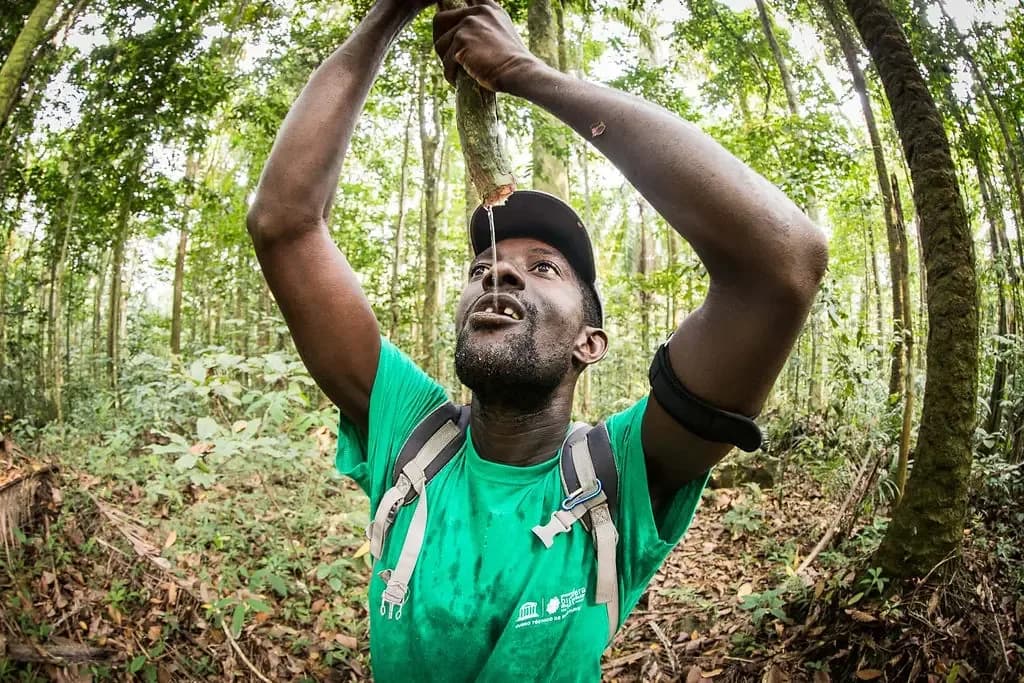
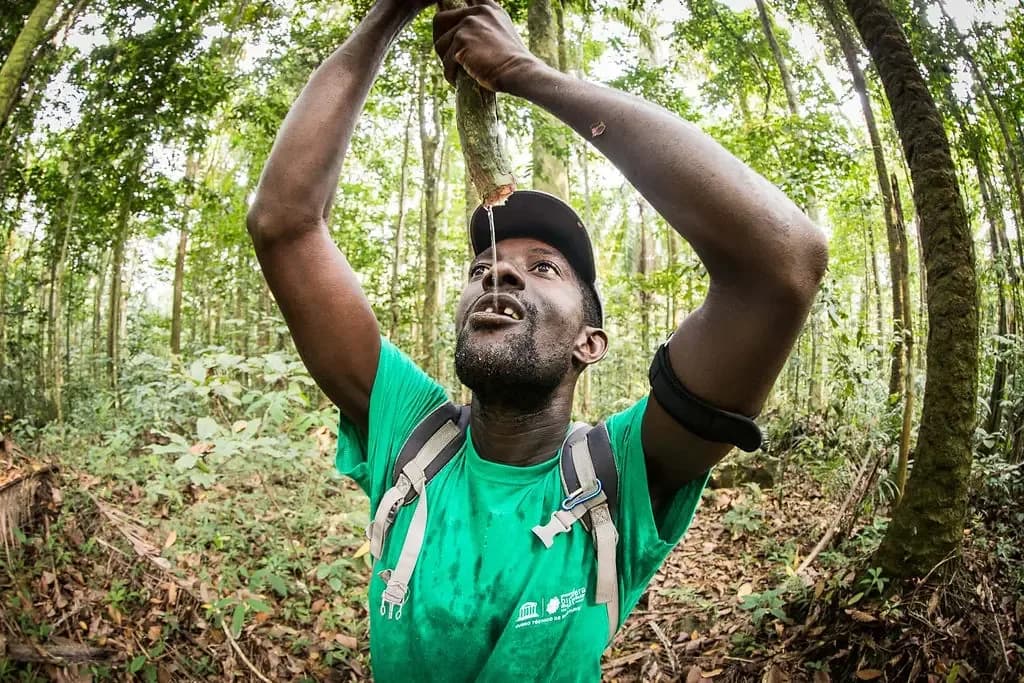
On forest trails, the local guide knows where it is safe to tread. Photo: Príncipe Collection
Dangerous animals in São Tomé and Príncipe: summary
- Large wild animals: none. No lions, crocodiles or elephants; the islands were never connected to the mainland.
- Venomous snakes: only one, the black cobra, and only on São Tomé island. It does not exist on Príncipe.
- Mosquitoes: the main health concern, because of malaria and dengue.
- Sea: many beaches have no lifeguard and some have strong currents.
- Stray dogs: do not touch them; rabies is a reason to see a doctor.
Are there snakes in São Tomé and Príncipe?
Yes, but few species, and almost all harmless. Many are endemic, meaning they exist only on these islands. Researchers from the California Academy of Sciences, who have studied the archipelago's fauna for years, record for example:
- Cobra sua sua ("fast snake"), endemic to Príncipe, active by day.
- Cobra jita ("slow snake"), nocturnal, found on both islands.
- Small blind snakes that live underground and that almost nobody sees.
According to these researchers, the black cobra is the only dangerous species on the islands.
The black cobra: the only dangerous land animal
The São Tomé black cobra (Naja peroescobari) is a true cobra. For a long time it was confused with the forest cobra of mainland Africa; only in 2017 was it described as a species in its own right and named after the Portuguese navigator Pêro Escobar, who reached the islands in the 15th century.
- Where it lives: only on São Tomé island, from the lowlands to mid-altitude forest, including plantations.
- Size: it can exceed 2 metres.
- Venom: it is venomous, and the people of São Tomé know and respect it. Little is yet known about the venom of this particular species.
- Behaviour: it is shy and avoids people. Most travellers spend a week on the island without seeing one.
- Protection: it is classified as Endangered by the IUCN. If you see one, move away and let it go on its way.
How to avoid problems on the trails
- Hike forest trails with a guide, who knows the paths and the signs.
- Wear closed shoes and long trousers in the bush and on plantations.
- Do not put your hands into holes, under logs or between rocks.
- At night, carry a torch outside lit areas.
- If bitten, stay calm, keep the limb still and go straight to the hospital in São Tomé city. It is one of the reasons to have travel insurance with medical assistance.
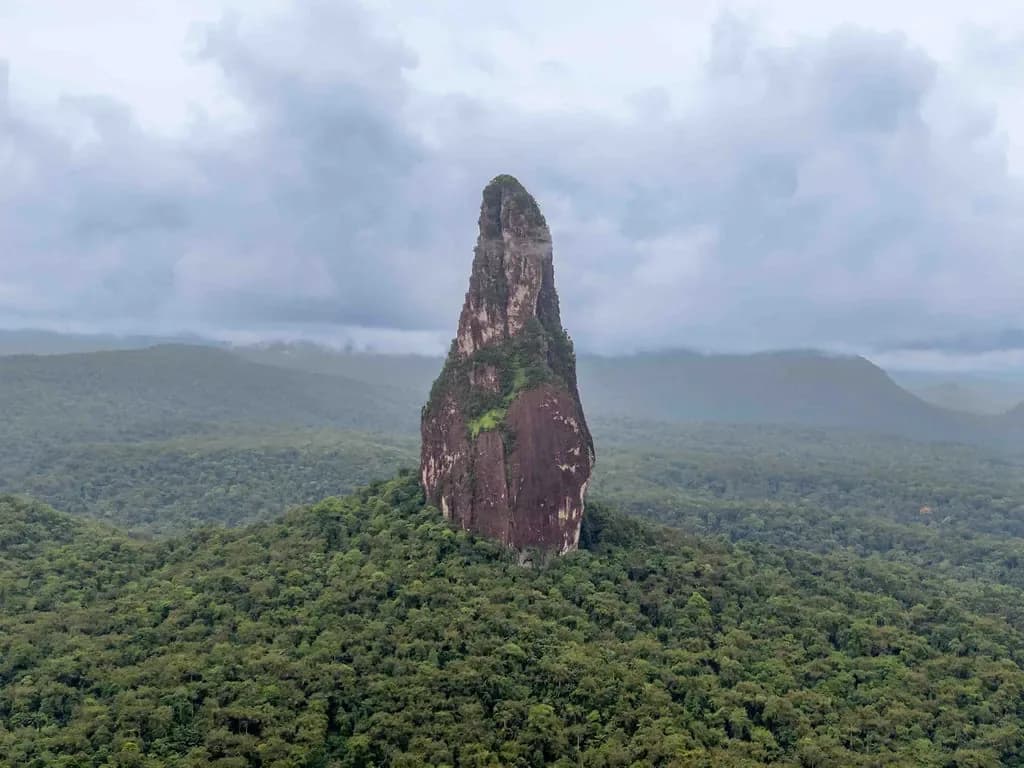
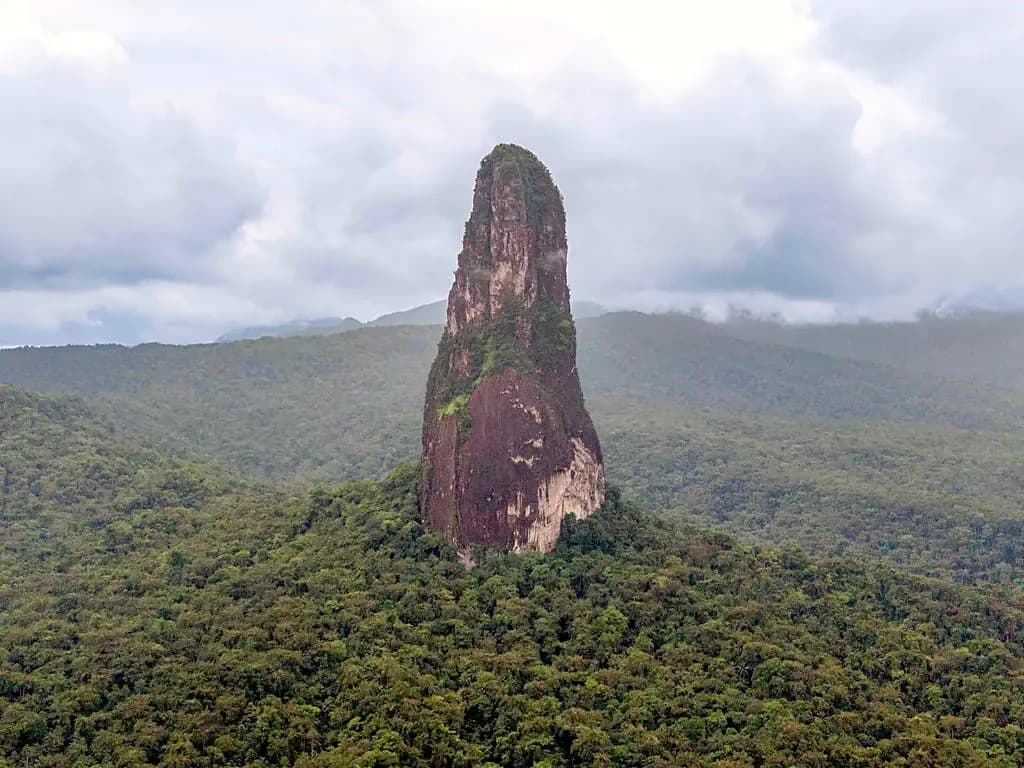
The forest of Obô Natural Park, in the south of São Tomé. Photo: Príncipe Collection
Enjoying this article?
Get the day-by-day trip programme, with dates and prices
Sao Tome and Principe Holidays with Flights: 9 Days of Plantations, Beaches and Rolas Islet9 days / 7 nightsfrom 2,350 €
Mosquitoes: the risk that really matters
The animal that matters most for visitors' health in São Tomé and Príncipe is the smallest. Malaria exists throughout the archipelago and there have been dengue outbreaks, transmitted by mosquitoes that bite during the day.
- Book a travel health appointment 4 to 6 weeks before you leave, to decide on preventive medication.
- Use a DEET repellent, especially in the late afternoon and evening, but also on day trips.
- At dusk, wear long sleeves and trousers.
- Sleep under a mosquito net, with air conditioning or a fan.
We explain everything in vaccines for São Tomé and Príncipe.
In the sea: currents and rocks
The sea in the Gulf of Guinea is warm and most beaches are calm, but there are no lifeguards and some beaches have strong currents, especially on the north coast during the rainy season.
- Ask your guide or accommodation where it is safe to swim.
- Do not swim alone or far from the shore.
- In rocky and coral areas, wear water shoes.
- Places such as Boca do Inferno are for watching from above, not for getting into the water.
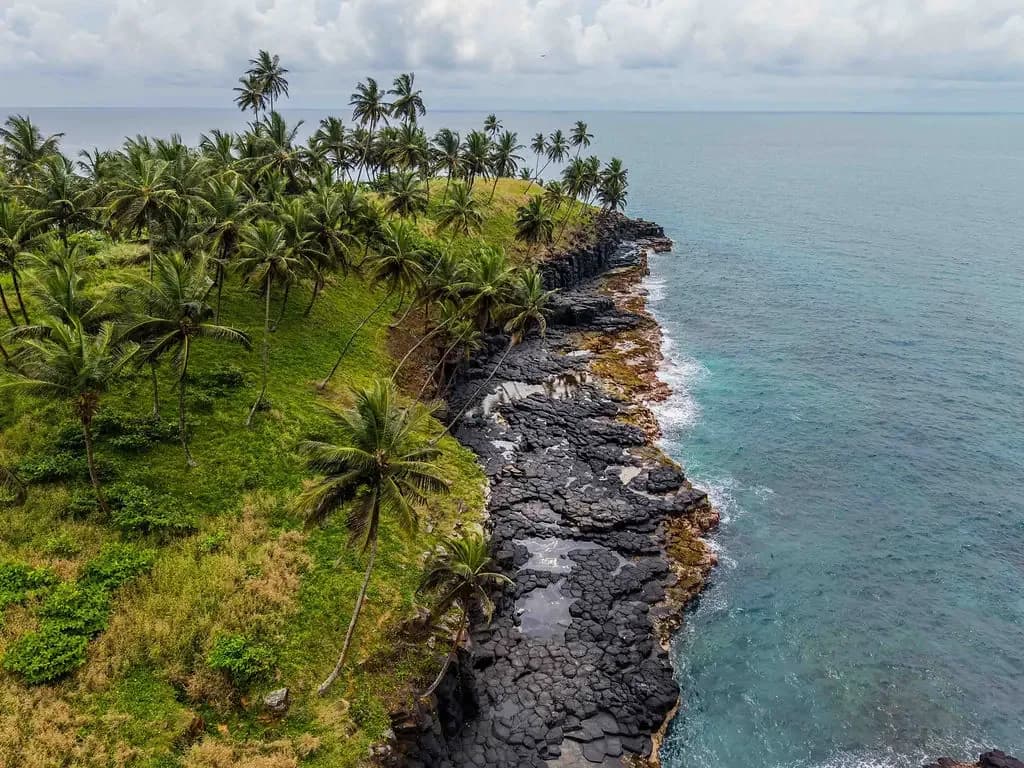
At Boca do Inferno, the sea surges powerfully between the volcanic rocks. Photo: Príncipe Collection
Dogs and other free-roaming animals
In villages and along the road there are free-roaming dogs, chickens and pigs. Dogs are usually peaceful, but do not pet or feed them. If you are bitten or scratched by an animal, wash the wound well with soap and water and see a doctor the same day, because of the risk of rabies. Anyone who will have close contact with animals, for example as a volunteer, should discuss the rabies vaccine at their travel health appointment.
Spiders, ants and other forest creatures
As in any rainforest, there are spiders, ants, centipedes and lots of insects. They are not a concern for those walking with a guide and closed shoes. In ecolodges and houses near the forest, shake out your shoes and clothes before putting them on and keep your suitcase closed.
Featured trip
Sao Tome and Principe Holidays with Flights: 9 Days of Plantations, Beaches and Rolas Islet
9-day small-group trip around São Tomé with direct flights from Lisbon, half board, the boat crossing to Rolas Islet and lunch by chef João Carlos Silva.
The animals you will want to see
São Tomé and Príncipe is famous for its nature, not its dangers. The wildlife that attracts travellers from all over the world is harmless:
- Sea turtles: between November and March they nest on the beaches, especially on Príncipe and in the south of São Tomé. Conservation projects run night outings.
- Humpback whales: they pass the islands between July and September, during the gravana dry season.
- Birds: the archipelago has dozens of bird species found nowhere else, and flocks of grey parrots live on Príncipe.
- Dolphins: seen quite often on boat crossings.
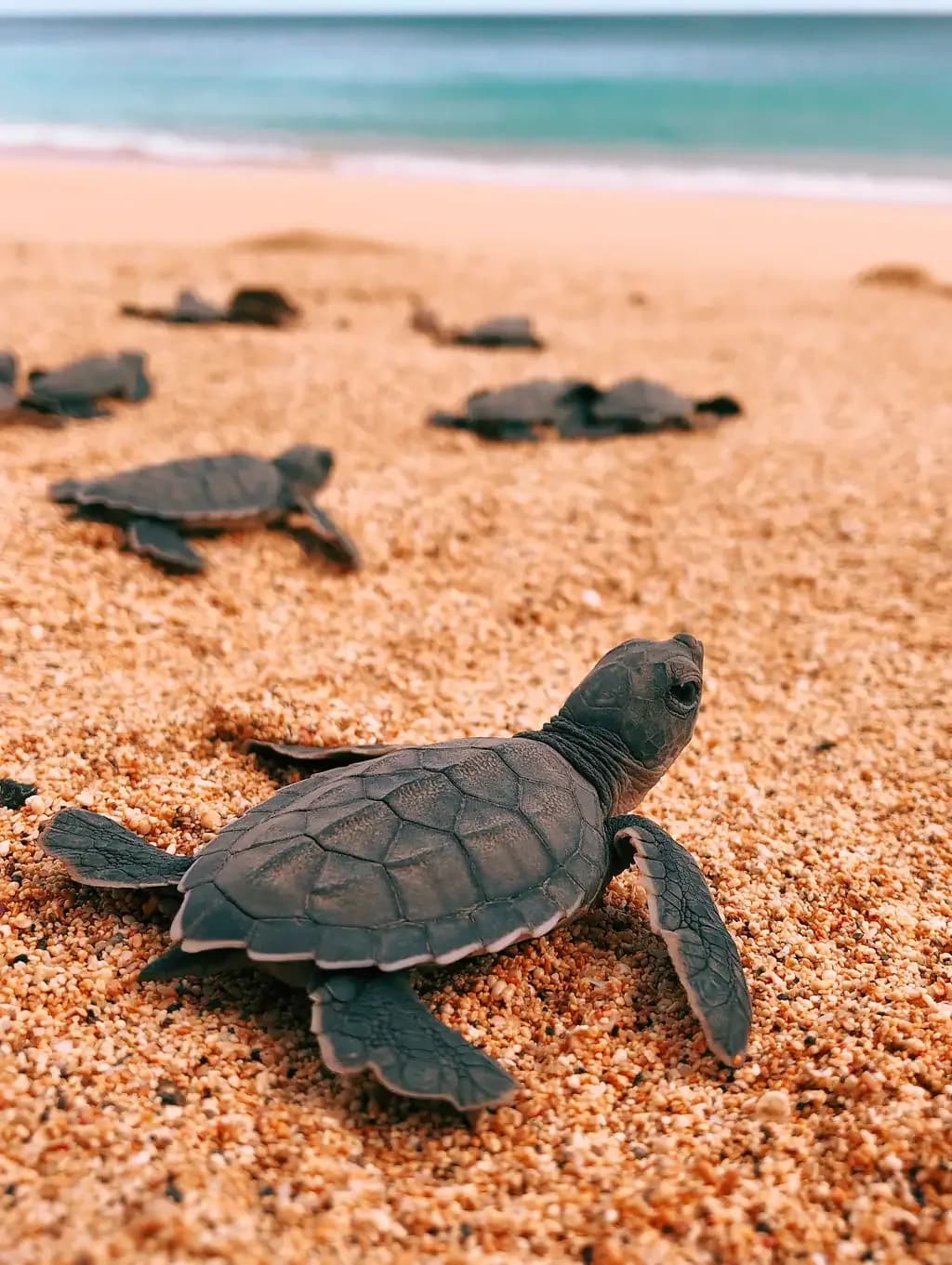
Sea turtle hatchlings heading for the sea on Príncipe Island. Photo: Príncipe Collection
Frequently asked questions about dangerous animals in São Tomé and Príncipe
Are there venomous snakes in São Tomé?
Yes, one: the black cobra (Naja peroescobari), found only on São Tomé island. It is shy and rarely seen by travellers.
Are there snakes on Príncipe Island?
There are snakes, but none are venomous. The black cobra does not exist on Príncipe.
Are there dangerous wild animals in São Tomé and Príncipe?
There are no large dangerous wild animals. The real risks are mosquitoes, because of malaria and dengue, and the currents on some beaches.
Is it dangerous to hike in the São Tomé forest?
No, if you go with a guide, closed shoes and long trousers. The guide knows the paths and how to avoid the black cobra.
Is it safe to swim in the sea in São Tomé and Príncipe?
On most beaches, yes, but there are no lifeguards and some have strong currents. Always ask your guide or accommodation.
Is São Tomé and Príncipe dangerous?
No. It is one of the most peaceful countries in Africa. We explain everything in is it safe to travel to São Tomé and Príncipe?.
Travel with a local guide
On our trips, trails and excursions are always led by São Tomé guides, who know the forest and the sea like nobody else. See the tour São Tomé and Príncipe trip, 9 days with flights, from €2,350 with flights from Lisbon, the Príncipe Island and São Tomé tour, from €2,950, and all dates under São Tomé and Príncipe trip. To prepare the rest, read our São Tomé and Príncipe travel tips.
Sources: Ceríaco et al. (2017), description of Naja peroescobari in the journal Zootaxa; California Academy of Sciences, Gulf of Guinea expeditions; Portuguese Ministry of Foreign Affairs, travel advice.
Vamos Fugir is a travel agency licensed by Turismo de Portugal (RNAVT n.º 4155). Follow us on Facebook and Instagram.