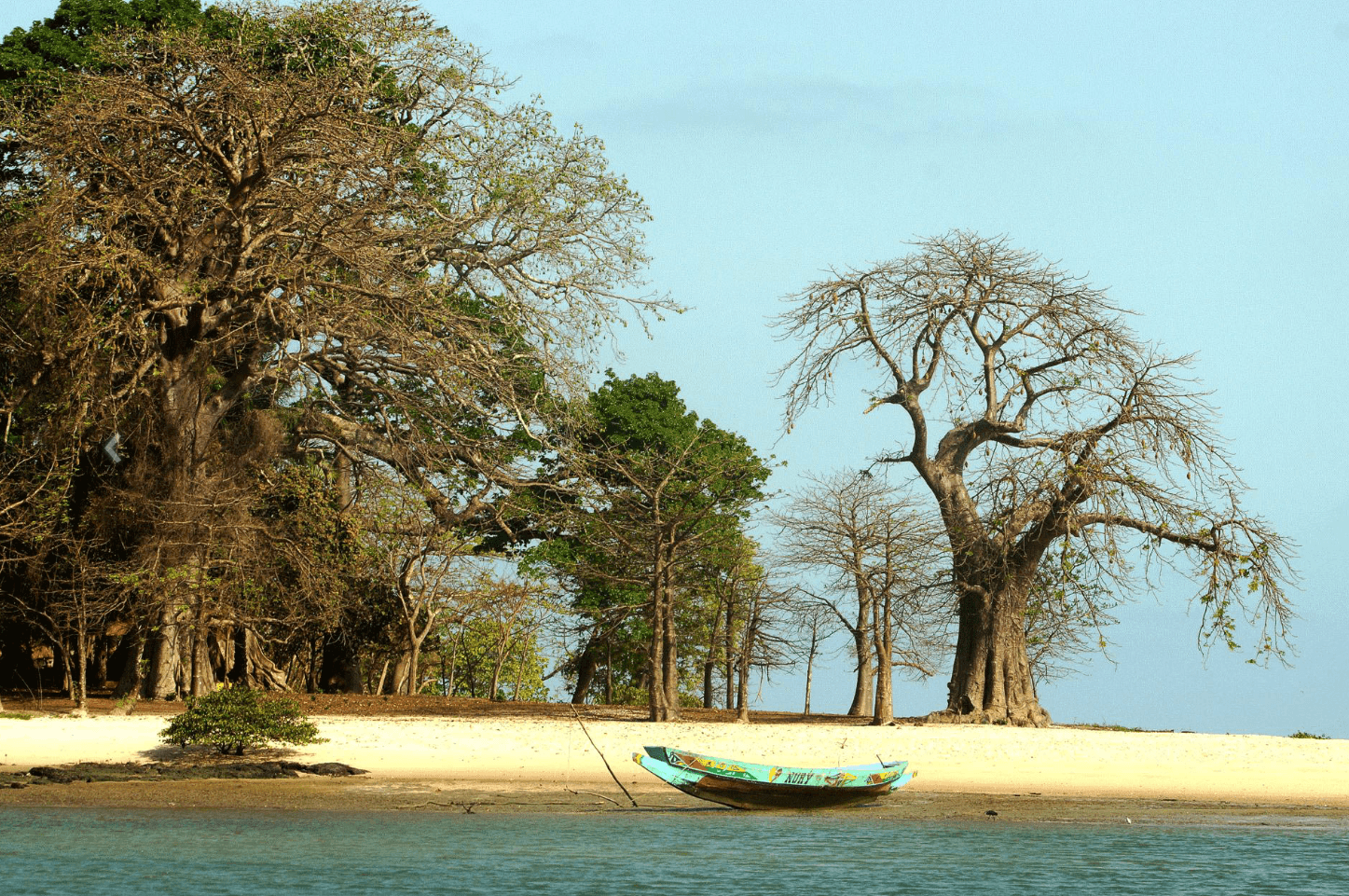
Bijagós
Expeditions to the Bijagós archipelago in Guinea-Bissau — a UNESCO Biosphere Reserve with turtles, mangroves and Bijagó villages.
Eighty-eight islands and islets in the Atlantic, most of them uninhabited, where the Bijagó monarchy still lives by its own laws. It is one of the last places in Africa that tourism has barely reached.
Trips
Climate and seasons
Best time to visit the Bijagós Islands
Two well-defined seasons: dry and rainy. The turtles keep their own calendar.
Nov · Dec · Jan · Feb · Mar · Apr · May
Dry season
24 °C – 32 °C
Clear skies, calm seas and easy access to the islands. The best time for the tour.
🦛 hippos · 🐦 birds · 🏝️ islands
Jun · Jul · Aug · Sep · Oct
Rainy season
25 °C – 30 °C
Heavy rain, especially in July and August, and rougher seas. It is also when turtle nesting begins.
🐢 turtles
Green turtle nesting on Poilão happens mainly between August and November.
Before you go
Practical information for travelling to the Bijagós Islands
Where we stay
In Bissau we stay in a hotel; on the islands, in simple guesthouses and tented camps close to nature. There are no luxury hotels in the Bijagós, and that is what keeps them wild.
How we get around
Between the islands we travel by boat, with times that depend on the tides. On land, on foot or in a local vehicle.
What fitness level do you need?
A normal level of fitness is enough: there are easy walks, boarding and landing on the beach and a few nights in tents.
Health and vaccinations
A yellow fever vaccination certificate is mandatory and malaria prevention is needed. Book a travel health consultation about a month before you go.
The Bijagós Islands, in Guinea-Bissau, are one of the wildest and most authentic places in Africa, just over 4 hours' flight from Lisbon. The archipelago has 88 islands and islets of mangroves, deserted beaches and sacred forests, home to hippos that swim in the sea, thousands of sea turtles and the Bijagó people, with their own traditions. In this guide we explain what to see, how to get there, the best time to go, how much it costs and what our 12-day Bijagós Islands tour is like.
What the Bijagós archipelago is
The Bijagós archipelago lies off the coast of Guinea-Bissau, in the Atlantic. Of its 88 islands and islets, only about 20 are inhabited. It has been a UNESCO Biosphere Reserve since 1996 and, in 2025, its coastal and marine ecosystems were inscribed on the World Heritage List. There are no big hotels, no roads and no crowds: you travel by boat, between tides, at the pace of the islands.
Our Bijagós Islands tour
The Wild Bijagós tour: Guinea-Bissau in its purest form lasts 12 days and 11 nights and costs €3,000 per person, all inclusive:
- TAP flights Lisbon – Bissau, with 23 kg checked baggage and taxes;
- accompanied by a guide from our agency;
- full board and all activities;
- all transfers, by car and by boat;
- accommodation in a hotel, guesthouse and tents.
The group is small, 6 to 10 people, and there is no single supplement. See the day-by-day programme in our 12-day Bijagós itinerary.
What to see in the Bijagós
- The hippos of Orango: in Orango National Park live hippos that have adapted to salt water and swim between the islands. They can be seen at the Anor lagoon.
- The turtles of Poilão: João Vieira and Poilão Marine National Park has one of the largest green turtle nesting colonies in the Atlantic. Nesting is seen at night, in the right season.
- Caravela, Uno and Meio islands: deserted beaches, forests and traditional villages.
- Mausoleum of Queen Okinka Pampa: in Eticoga, on Orango island, honouring the last queen of the Bijagós.
- Grey parrot: the endangered Timneh subspecies can be seen on João Vieira island.
- Bissau and Quinhamel: the market, the port and local crafts before heading out to the islands.
The Bijagó people
The Bijagós keep a culture of their own, with sacred islands that can only be entered with permission, initiation ceremonies and a strong role for women in community life. On our tour we spend a day with a local family, watch a traditional dance and visit villages, schools and health centres, always respectfully and with guides from the region.
Best time to visit the Bijagós
The dry season, from November to May, is the best time to visit the Bijagós: clear skies, calm seas and easy access to the islands. Turtle nesting at Poilão happens mainly between August and November. June to October is the rainy season. We explain everything in our article on the best time to visit the Bijagós Islands.
How to get to the Bijagós and documents
- Flight: from Lisbon to Bissau, about 4 hours non-stop. See flights to Bissau.
- Boat: from Bissau to the islands you travel by boat, between 2 and 5 hours depending on the island and the tide.
- Visa: Portuguese citizens need a visa; check the rules for your nationality. We explain the process in Guinea-Bissau visa.
- Health: a yellow fever vaccination certificate is required and there is a risk of malaria. Book a travel health consultation.
- Time zone: the same time as Portugal in winter; 1 hour behind in summer.
- Currency: the CFA franc (XOF), pegged to the euro.
How much does a trip to the Bijagós cost?
Travelling to the Bijagós on your own is expensive and complicated: boats, guides and park permits push the cost up a lot. Our 12-day tour costs €3,000 with flights, full board and all activities. We do the maths in our article how much a trip to the Bijagós costs.
Frequently asked questions about the Bijagós Islands
Where are the Bijagós Islands?
Off Guinea-Bissau, on the west coast of Africa, about 4 hours' flight from Lisbon.
How many islands are there in the Bijagós archipelago?
88 islands and islets, of which about 20 are inhabited.
Are the Bijagós a World Heritage Site?
Yes. As well as a Biosphere Reserve since 1996, the archipelago's coastal and marine ecosystems were inscribed as a UNESCO World Heritage Site in 2025.
Is it safe to travel to the Bijagós?
Yes, especially on an organised tour, with a guide and boat transport arranged. The islands are peaceful and the people welcoming.
When is the best time to visit the Bijagós?
From November to May, in the dry season. To see turtle nesting, between August and November.
Do you need a visa for Guinea-Bissau?
Yes, Portuguese citizens need a visa, as well as a yellow fever vaccination certificate. Check the rules for your nationality.
Book your Bijagós Islands tour
Places are limited. See the full programme of the Wild Bijagós tour or contact us on +351 937 045 579 or info@vamosfugir.pt.