
Bijagós · 3 min
Guinea-Bissau Visa and Entry Requirements: A Complete Guide
Luciano Baetz · 29 August 2026
Do you need a visa for Guinea-Bissau? Here's how to apply for an e-visa, get one on arrival in Bissau, and what documents and vaccines you'll need.
Guinea-Bissau is not a place you can show up to without doing a bit of homework first. Between the visa, the mandatory vaccination, and passport rules, there are a handful of requirements every traveler needs to sort out before boarding a flight to Bissau. The good news: none of it is particularly complicated once you know the steps. Here's exactly what you need.
Do You Need a Visa for Guinea-Bissau?
For most nationalities, yes. Guinea-Bissau only exempts citizens of the 14 other member states of ECOWAS (the Economic Community of West African States) from needing a visa. If you're traveling from Europe, North America, the UK, Australia, or almost anywhere outside that specific West African bloc, you will need to arrange a visa before or upon arrival.
Three Ways to Get Your Guinea-Bissau Visa
You have three practical options, and which one makes sense depends on how far ahead you're planning and how comfortable you are handling paperwork on arrival.
1. E-visa (recommended for most travelers). The simplest and most predictable route is applying online in advance through an official e-visa portal such as rgb-visa.com. You submit your details and passport information digitally, pay the fee online, and receive an approved e-visa to bring with you, either printed or on your phone. This removes the uncertainty of arrival-day processing and is the option most travel operators recommend.
2. Embassy or consulate application. If you prefer a traditional route, or if you live near a Guinea-Bissau embassy or consulate, you can apply in person or by mail before your trip. This typically takes longer than the e-visa and requires submitting your passport physically, so build in extra lead time — several weeks is a safe buffer.
3. Visa on arrival at Bissau Airport. Guinea-Bissau also issues visas on arrival at Osvaldo Vieira International Airport (OXB). You'll need passport photos and cash to pay the visa fee on the spot. This works, but it does mean joining a queue after a long flight and being at the mercy of however busy the airport is that day. If you're arriving with a group on a tight schedule to connect with your guide, the e-visa is the far less stressful choice.
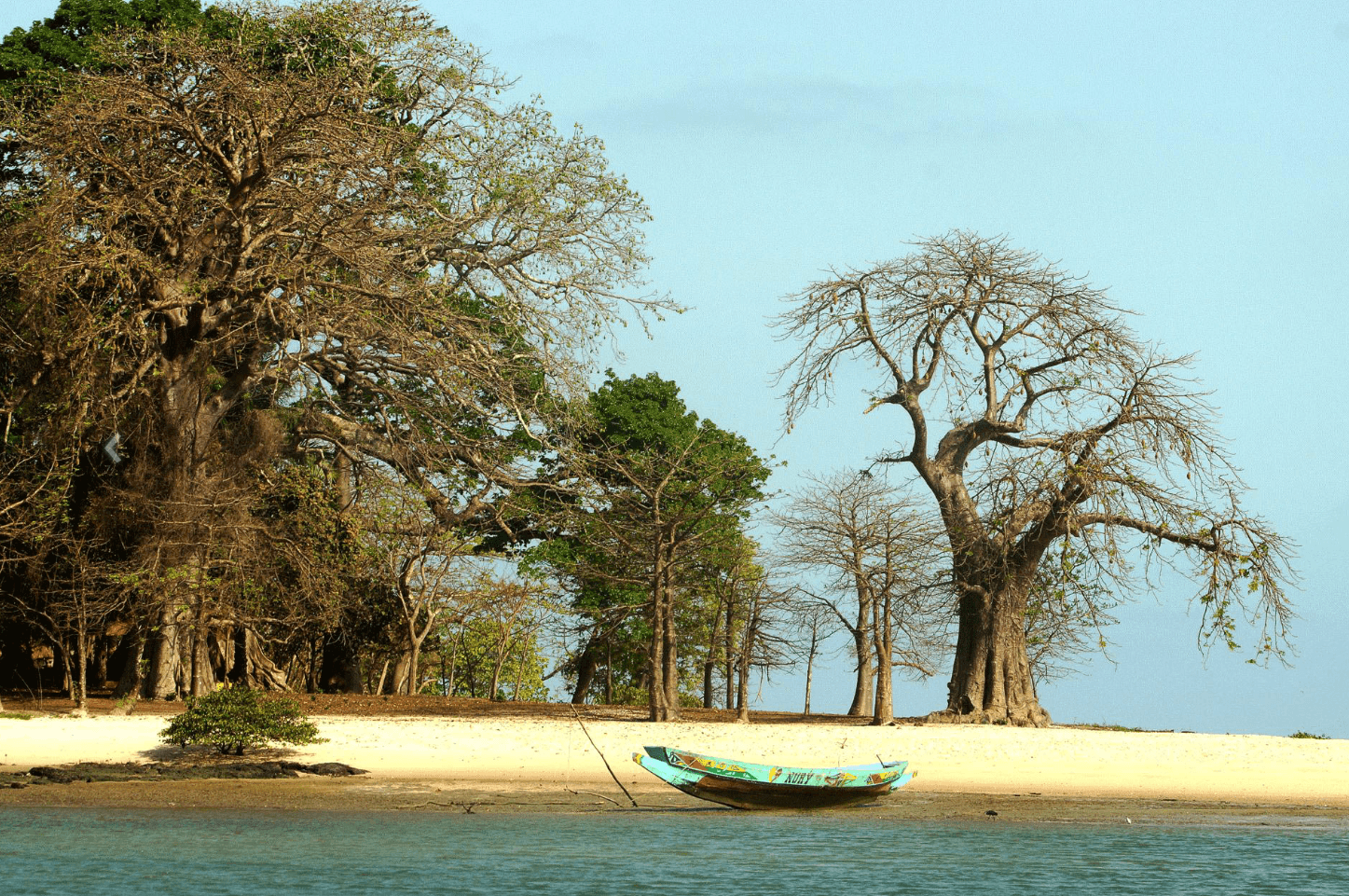
Featured trip
Bijagos Islands Tour: Wild Guinea-Bissau in 12 Days
A journey through the Bijagós Archipelago, a UNESCO Biosphere Reserve in Guinea-Bissau
Yellow Fever Vaccination: Not Optional
Guinea-Bissau requires proof of yellow fever vaccination for entry — this is a mandatory requirement, not a recommendation, and you will need to show an International Certificate of Vaccination or Prophylaxis (the "yellow card") on arrival. Get vaccinated well in advance of your trip, since the vaccine typically needs to be administered at least 10 days before travel to be considered valid, and it's often only available at designated travel health clinics. If you don't already have documented immunity or a valid certificate, this should be one of the very first things you arrange once you book your trip — plan for it months, not days, ahead.
Beyond yellow fever, it's worth having a broader conversation with a travel health clinic or doctor about recommended vaccines and antimalarial medication for West Africa, since Guinea-Bissau is a malaria-risk area. This isn't a mandatory entry requirement, but it's a sensible health precaution given the itinerary spends significant time in rural areas and on the islands.
Passport Validity
Make sure your passport is valid for at least 6 months beyond your planned entry date into Guinea-Bissau. This is a standard rule across much of West Africa and immigration officials will not make exceptions at the border. Also check that you have at least one, ideally two, completely blank visa pages.
Travel Insurance
While not always formally checked at the border, travel insurance covering medical evacuation is strongly recommended for a trip this remote. The Bijagos Islands are genuinely off the grid: medical facilities on the islands are basic (Orango and a few villages have small health centers, but nothing resembling a hospital), and reaching advanced care in an emergency would mean transport back to Bissau or beyond. Insurance that includes medical evacuation coverage is not a box-ticking exercise here — it's a real safety net.
A Simple Pre-Departure Checklist
- Passport valid 6+ months, with blank pages
- Guinea-Bissau visa arranged (e-visa recommended, apply at least 2–3 weeks ahead)
- Yellow fever vaccination completed and certificate in hand (10+ days before travel)
- Travel insurance with medical evacuation coverage
- Photocopies (physical and digital) of your passport, visa, and vaccination certificate, kept separately from the originals
Getting these four or five items sorted before you fly removes almost all the friction from what can otherwise feel like an intimidating destination on paper. Once you land in Bissau with the right paperwork in hand, the rest of the trip is in your guide's hands.
Follow us
Stay up to date with our trips and news on [Facebook](https://www.facebook.com/vamosfugirviagens/) and [Instagram](https://www.instagram.com/vamosfugirviagens/).