Bijagós · 5 min
12-Day / 11-Night Bijagos Islands Itinerary: Wild Guinea-Bissau, Day by Day
Luciano Baetz · 29 August 2026
A full 12-day, 11-night itinerary through the Bijagos Islands — from Bissau's markets to hippos in Orango, turtle nesting on Poilão, and village life in the archipelago.
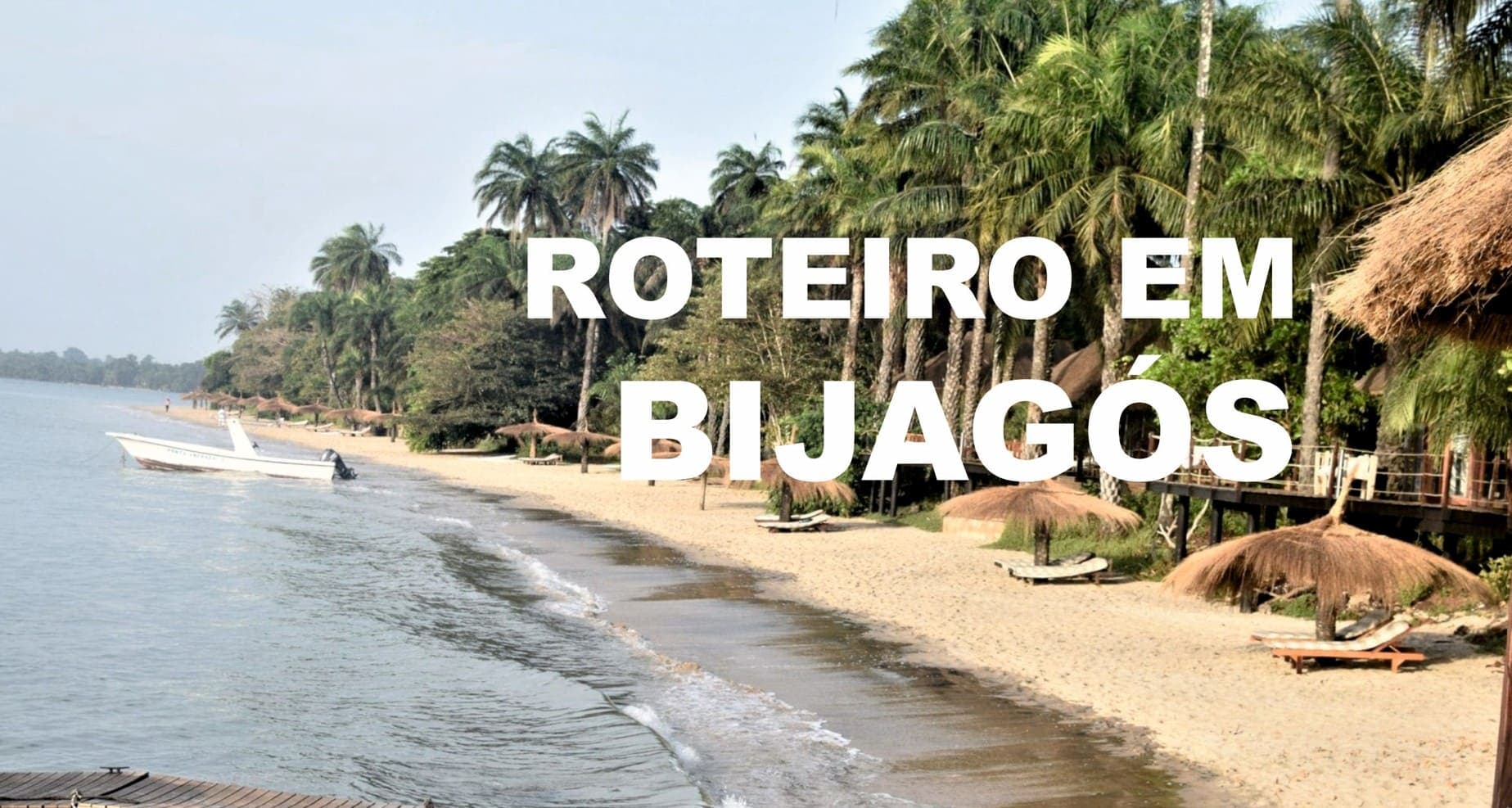
Some itineraries are built to hit highlights. This one is built to actually live inside the Bijagos Archipelago for long enough to understand it — a UNESCO Biosphere Reserve made up of roughly ninety islands and islets off the coast of Guinea-Bissau, where saltwater hippos wade through mangrove lagoons, green sea turtles nest on a sacred uninhabited island, and daily life in Bijagó villages runs on customs that predate any tourist route. Here's how our 12-day, 11-night "Bijagós Selvagem" circuit, TAP flight included, actually unfolds.
Day 1: Arrival in Bissau
The trip begins in Bissau, Guinea-Bissau's compact, unpolished capital. After settling in, the first day is spent getting a feel for the city: browsing the craft market for Bijagó woodwork and textiles, wandering the central market where the country's produce, fish, and daily commerce converge, and visiting the historic port of Bissau, a good place to start understanding the country's colonial and post-independence history before heading out toward the islands.
Day 2: Bissau to Quinhamel
Leaving the capital behind, the route heads to Quinhamel, with lunch along the way in the small town of Kéré. In the afternoon, a walking exploration of Carache offers a first proper taste of rural Guinea-Bissau — rice paddies, palm groves, and village life well outside any tourist infrastructure.
Day 3: Caravela Island
The circuit's first island crossing lands on Caravela, home to the villages of Bitchau and Anipoc. A highlight here is the walk through a sacred forest inhabited by monkeys, one of several sites throughout the archipelago where traditional Bijagó spiritual beliefs and untouched forest ecosystems overlap. The day closes with a picnic at Ponta Ibatcha, a quiet stretch of coastline looking out over the wider archipelago.
Day 4: Uno and Orango Islands
This is one of the itinerary's richest cultural and wildlife days. On Uno Island, the visit to Ossocone village includes its local school, offering a genuine look at community life and education in a remote Bijagó settlement. In Posto village, the health center shows how basic medical care functions on the islands. From there, the route continues into Orango Natural Park, part of the wider Bijagos Biosphere Reserve, culminating at Anor Lagoon — one of the best places in the archipelago to spot the region's famous saltwater hippos, a subspecies of hippopotamus uniquely adapted to brackish, coastal water.
Day 5: Poilão — João Vieira and Poilão Marine National Park
Day five heads into the João Vieira and Poilão Marine National Park, crossing the Orango mangrove by boat en route. Poilão itself is a small, uninhabited, and sacred island — considered one of the most important green sea turtle nesting sites on the entire Atlantic coast of Africa, according to research from Portugal's MARE-ISPA marine science center. If timed within nesting season (roughly August to November), this day includes a night-time observation of green sea turtles coming ashore to lay their eggs, a rare and genuinely moving wildlife encounter available in very few places worldwide.
Day 6: João Vieira and Ilha de Meio
An early start brings the chance to see turtles at dawn, when hatchlings or late-nesting females may still be visible on the beach. The day continues with a relaxed picnic on Ilha de Meio, a small, idyllic island within the marine park, before dinner at Chez Claude — a well-known local spot that has become something of an institution for travelers passing through this part of the archipelago.
Day 7: João Vieira and Uno
Back on João Vieira and then Uno, the focus shifts to birdlife, including a subspecies of the Timneh grey parrot found in the archipelago — a smaller, darker-tailed relative of the more widely known African grey parrot, and a species of real interest to birdwatchers. The day also includes further exploration of Orango island's landscapes and villages.
Featured trip
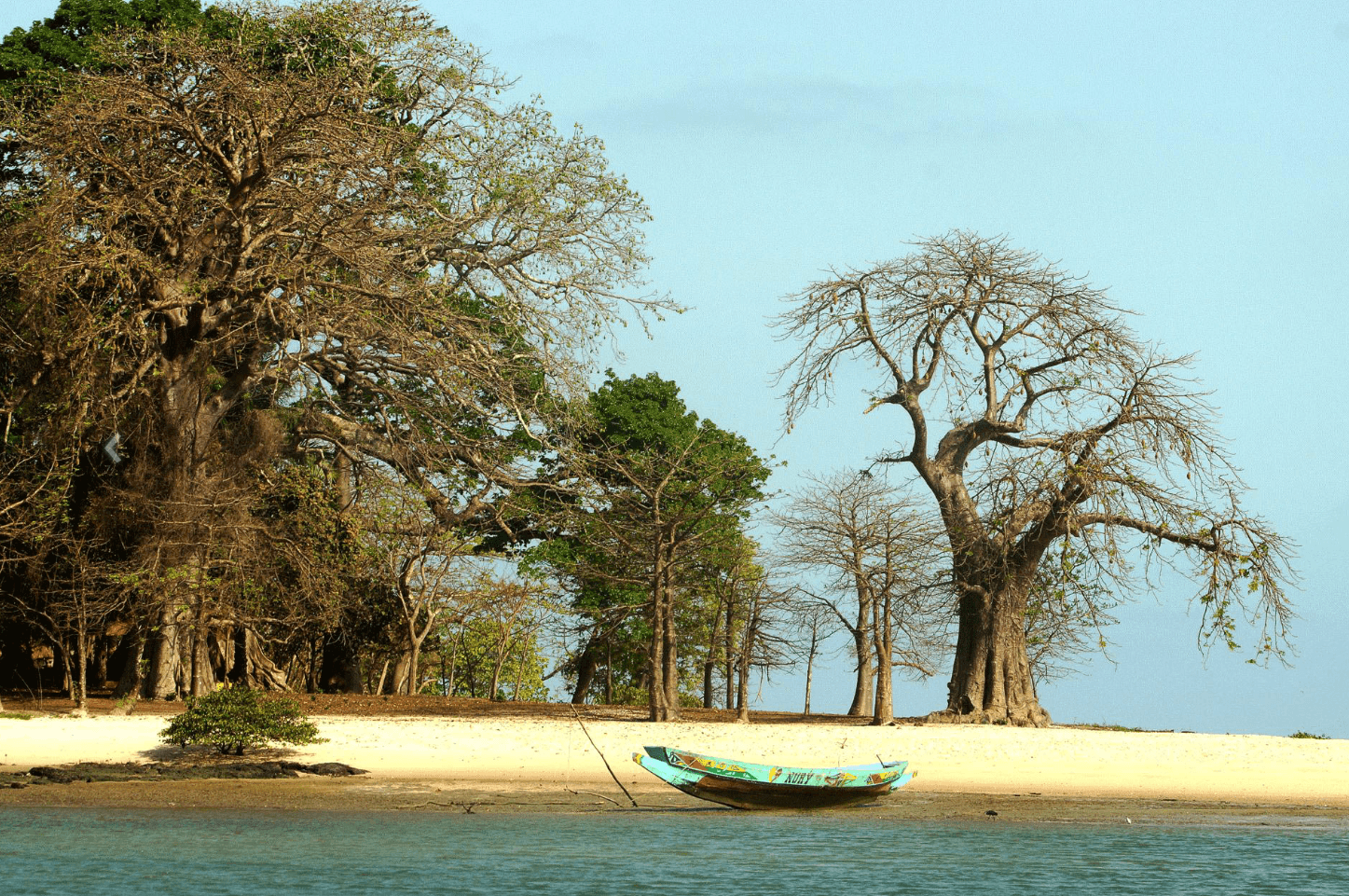
Bijagos Islands Tour: Wild Guinea-Bissau in 12 Days
A journey through the Bijagós Archipelago, a UNESCO Biosphere Reserve in Guinea-Bissau
Day 8: Orango Island — Eticoga and Queen Okinka Pampa
Orango Island holds one of the archipelago's most culturally significant sites: the village of Eticoga and the mausoleum of Queen Okinka Pampa, a historical Bijagó queen whose legacy is tied to matrilineal traditions still present in Bijagó society today. This day offers real insight into the social structure that has shaped these islands for centuries, quite distinct from most other cultures in West Africa.
Day 9: Uno and Kéré — Traditional Bijagó Dance
Returning to Uno and Kéré, day nine centers on Bijagó village life and culminates in a traditional Bijagó dance performance — a chance to see the archipelago's distinctive ceremonial and cultural traditions performed by the communities that keep them alive, rather than staged for a tour circuit.
Day 10: Karache Island — A Day With a Local Family
The most immersive day of the entire circuit takes place on Karache Island, in the village of Ampintcha. Rather than a scheduled sightseeing itinerary, this is a full day spent with a local family, joining in daily activities including shellfish gathering at low tide — a traditional practice central to the diet and economy of Bijagó coastal communities. It's the kind of day that turns a wildlife-and-culture trip into something closer to a genuine exchange.
Day 11: Return — Bissau to Lisbon
The circuit closes with the return journey from Bissau back to Lisbon, typically via TAP Air Portugal, marking the end of an itinerary that moves through roughly a dozen islands, several UNESCO-protected ecosystems, and communities that most travelers to West Africa never encounter.
Practical Notes for Planning This Itinerary
This 12-day, 11-night circuit runs as a fully guided, all-inclusive package — TAP flight, private guide, 4x4 transport, inter-island boats, community lodging, and full board — since independent travel through the Bijagos is not realistically possible given the lack of scheduled inter-island transport. Vamos Fugir's "Bijagós Selvagem" runs this exact circuit for a fixed €3,000 per person, with everything above included and no single-room supplement.
Timing matters: traveling in the dry season (November–May) gives the best odds of spotting saltwater hippos and the smoothest 4x4 transfers, while a trip planned for August through November opens the door to the extraordinary green turtle nesting on Poilão — though at the cost of rainier, muddier travel conditions. Whichever window you choose, this itinerary is built to deliver the full breadth of what makes the Bijagos Archipelago one of the last truly wild, UNESCO-protected corners of the West African coast.
Book with confidence
Vamos Fugir is a travel agency licensed by Turismo de Portugal ([RNAVT no. 4155](https://rnt.turismodeportugal.pt/rnt/RNAVT.aspx?nr=4155)). Follow us on [Facebook](https://www.facebook.com/vamosfugirviagens/) and [Instagram](https://www.instagram.com/vamosfugirviagens/).